Defence Monitor

technology

Axiom Space’s private astronauts back to Earth after 2nd mission on ISS

Axiom Space’s private astronauts back to Earth after 2nd mission on ISS

Washington, May 31 (IANS) Four astronauts, including the first woman from Saudi Arabia, of the American private space habitat company Axiom Space have returned safely to Earth after spending eight days on their second mission to the International Space Station (ISS), the company has said. The Ax-2 crew aboard the SpaceX Dragon Freedom spacecraft safely splashed down off the coast of Florida at 11.04 p.m. on Tuesday (8.34 a.m. on Wednesday IST). "The Dragon spacecraft has safely returned to the recovery ship," the company said in a tweet. "The crew is returning with a plethora of data. The Ax-2 mission is…
Read More
Eurosatory 2022: Meprolight highlights the Mepro TIGON – a hybrid thermal & red dot sight for both day & night target acquisition and announces first orders

Eurosatory 2022: Meprolight highlights the Mepro TIGON – a hybrid thermal & red dot sight for both day & night target acquisition and announces first orders

Combining the advantages of uncooled thermal technology with clear, see-through day optics in a single sight, the Mepro TIGON system enhances survivability and lethality and enables significantly improved operational flexibility. Eurosatory Paris:  Meprolight (1990) Ltd. – a member of the SK Group (founded by Mr. Samy Katsav) is a leading manufacturer of electro-optical systems, thermal and night vision equipment, as well as self-illuminated sights for military, law enforcement and civilian applications. The company announces first orders of its recently launched advanced MIL-STD Mepro TIGON sight. The system integrates the advantages of uncooled thermal imaging technology with those of see-through day…
Read More
DRDO’s chaff technology to safeguard naval ships from missile attack

DRDO’s chaff technology to safeguard naval ships from missile attack

New Delhi: The Defence Research and Development Organisation (DRDO) has developed an advanced chaff technology which will protect naval ships against enemy missile attack. Defence laboratory Jodhpur (DLJ), a DRDO laboratory, has indigenously developed three variants of this critical technology, namely Short Range Chaff Rocket (SRCR), Medium Range Chaff Rocket (MRCR) and Long Range Chaff Rocket (LRCR) meeting Indian Navy's qualitative requirements. Recently, Indian Navy conducted trials of all three variants in the Arabian Sea on Indian Naval Ship and found the performance satisfactory. Chaff is a passive expendable electronic countermeasure technology used worldwide to protect naval ships from enemy's radar…
Read More
India enters elite hypersonic missile club

India enters elite hypersonic missile club

New Delhi: DRDO has successfully demonstrated the Hypersonic air-breathing scramjet technology with the flight test of Hypersonic Technology Demonstration Vehicle (HSTDV) at 1103 hours on 07 Sept 2020 from Dr. APJ Abdul Kalam Launch Complex at Wheeler Island, off the coast of Odisha. The Hypersonic cruise vehicle was launched using a proven solid rocket motor, which took it to an altitude of 30 km, where the aerodynamic heat shields were separated at hypersonic Mach number. The cruise vehicle separated from the launch vehicle and the air intake opened as planned. The hypersonic combustion sustained and the cruise vehicle continued on its…
Read More
Indian scientists see new type of magnetic explosion on Sun

Indian scientists see new type of magnetic explosion on Sun

Washington: Using images from NASAs Solar Dynamics Observatory,a team of scientists including those from the Indian Institute of Technology (BHU), Varanasi and the Indian Institute of Astrophysics in Bengaluru has observed a magnetic explosion the likes of which has never been seen before. The observation, which confirms a decade-old theory, may help scientists understand a key mystery about the Sun's atmosphere, better predict space weather, and may also lead to breakthroughs in the controlled fusion and lab plasma experiments, according to the study published in the Astrophysical Journal."This was the first observation of an external driver of magnetic reconnection," said Abhishek…
Read More
NASA’s new mission to study space weather from ISS

NASA’s new mission to study space weather from ISS

Washington: NASA has selected a new mission that will help scientists understand and, ultimately, forecast the vast space weather system around our planet.The Atmospheric Waves Experiment (AWE) mission will cost $42 million and is planned to launch in August 2022, attached to the exterior of the Earth-orbiting International Space Station (ISS), the US space agency said in a statement on Tuesday. From its space station perch, AWE will focus on colourful bands of light in Earth's atmosphere, called airglow, to determine what combination of forces drive space weather in the upper atmosphere. "This mission absolutely meets that standard with a creative…
Read More
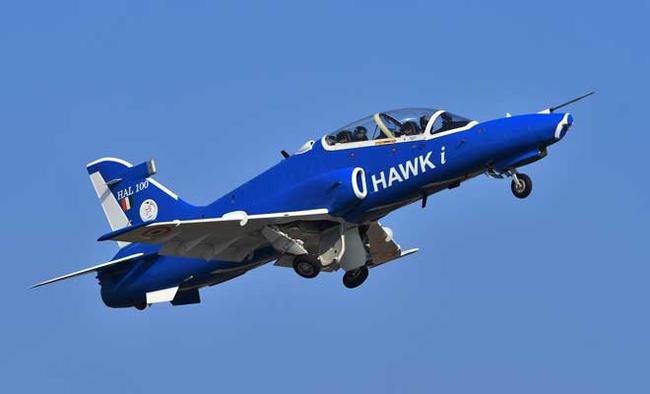
Maiden Flight of Hawk-i with Indigenous RTOS Developed by HAL

Maiden Flight of Hawk-i with Indigenous RTOS Developed by HAL

Bengaluru: With its increased thrust towards technology development, Hindustan Aeronautics Limited, has achieved a milestone with the first flight of Hawk-i with indigenous Real Time Operating System (RTOS) developed by it. It is the first indigenous RTOS that has been developed in the country from scratch. It is also the first instance that an indigenous RTOS has been certified by CEMILAC, says Mr. T. Suvarna Raju, CMD, HAL. The RTOS is the system software which provides a standard run-time environment for real-time applications execution in a safe and reliable manner. “The RTOS is a key technology for concurrent execution of multiple applications…
Read More
LCH Makes Maiden Flight with Indigenous AFCS

LCH Makes Maiden Flight with Indigenous AFCS

Bengaluru:  Giving further thrust to the ‘Make in India’ initiative, Hindustan Aeronautics Limited carried out the first flight of Light Combat Helicopter (Technology Demonstrator-2) with its own designed and developed Automatic Flight Control System (AFCS) for the first time in the country.   The maiden flight was flawless and flew for 20 minutes with the engagement of the system throughout. The development of indigenous AFCS is HAL funded project and will replace the high value imported system, says Mr. T. Suvarna Raju, HAL-CMD. The AFCS is a digital four axis flight control system capable of performing control & stability augmentation function and…
Read More
‘Indian rocket failure not be due to design fault’

‘Indian rocket failure not be due to design fault’

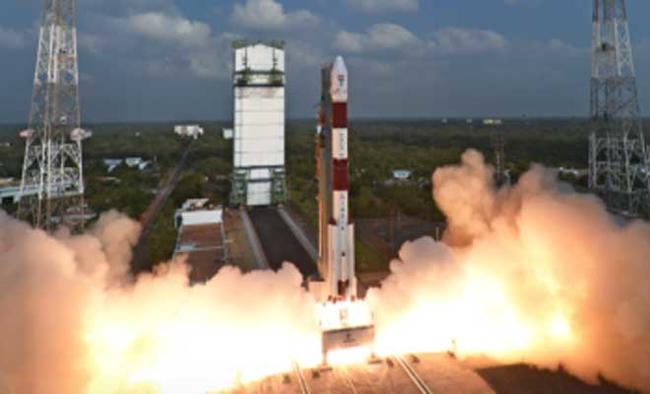
Chennai: The non-separation of the heat shield of the PSLV, which trapped within itself the navigation satellite and resulted in a failed mission on Thursday, could be due to failure of component quality or quality checks, not a design failure, space technology experts said. "The PSLV rocket has been successful for the past several years. So the question of design failure does not arise. It could be an issue of a failed component or a process quality issue," M.Y.S. Prasad, a former Director of the Satish Dhawan Space Centre, told. Satellites are housed atop the rocket and covered by a heat…
Read More
Coming of age: Start-ups should move to next level, says Nasscom

Coming of age: Start-ups should move to next level, says Nasscom

New Delhi: The Indian start-up ecosystem is evolving and it is time for stakeholders to move to the next level and collaborate with the external eco-system, says K.S. Vishwanathan, Vice President at Nasscom."It is now time for the companies to move to the next level of mid-stage and growth," Vishwanathan, who is also head of Nasscom's 10,000 Start-ups programme, told  in a telephonic interview from Mumbai. A start-up is said to evolve through four stages -- early stage (idea or prototype), mid-stage (prototype to product), growth stage (product business) and mature stage (business to scale).The National Association of Software and Services Companies…
Read More